View Inc
View Wellness
I designed View Wellness, a 0 to 1 mobile app that reframed smart window tinting as a wellness system instead of a basic home control tool. The experience centered on circadian rhythm schedules and outcome-based automation to help users improve sleep, reduce glare, and support daytime energy without manual adjustments. This made smart glass feel more purposeful and differentiated from traditional smart home apps.
Context
I worked on the creation of a new mobile app experience called View Wellness for a smart window platform that automatically adjusts window tint. The underlying technology controlled light and glare, but the product vision expanded to position the system as a wellness tool rather than just an environmental control. My role was to design the foundational app experience that translated smart glass technology into a daily health and lifestyle product.
Problem
Window tint could be controlled, but that alone did not communicate why the system mattered to users. Without a strong product narrative, the experience risked feeling like a basic home control app instead of a meaningful wellness solution. At the same time, expecting users to manually adjust light levels throughout the day was unrealistic. The challenge was to connect window behavior to human outcomes such as sleep quality, energy, eye comfort, and productivity, while making automation simple, intuitive, and trustworthy.
Approach
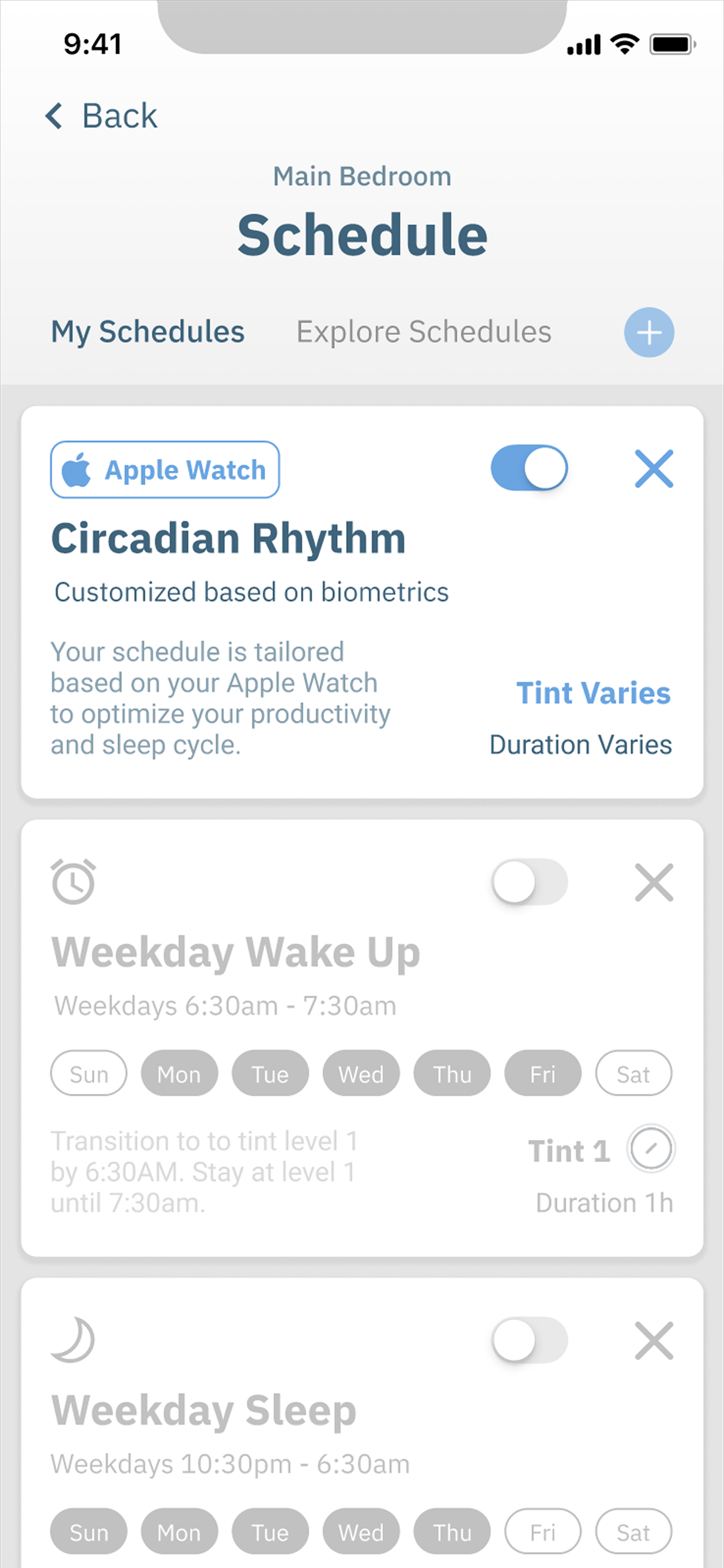
I designed the experience around wellness-driven automation rather than manual controls. A key decision was introducing circadian rhythm schedules that adjusted window tint based on time of day and natural light patterns. Instead of asking users to think in terms of tint levels, the system framed settings in terms of outcomes like better sleep, less glare, and improved daytime alertness.
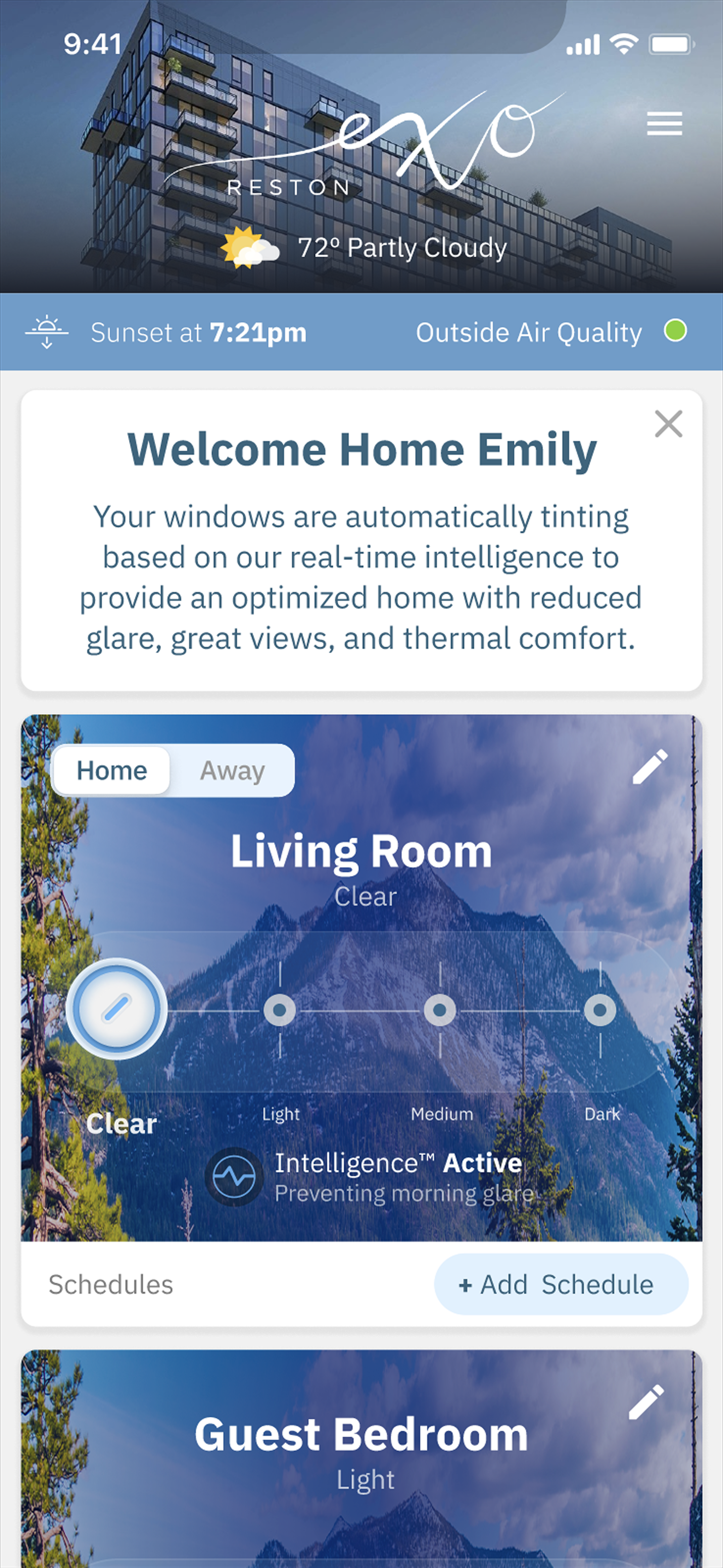
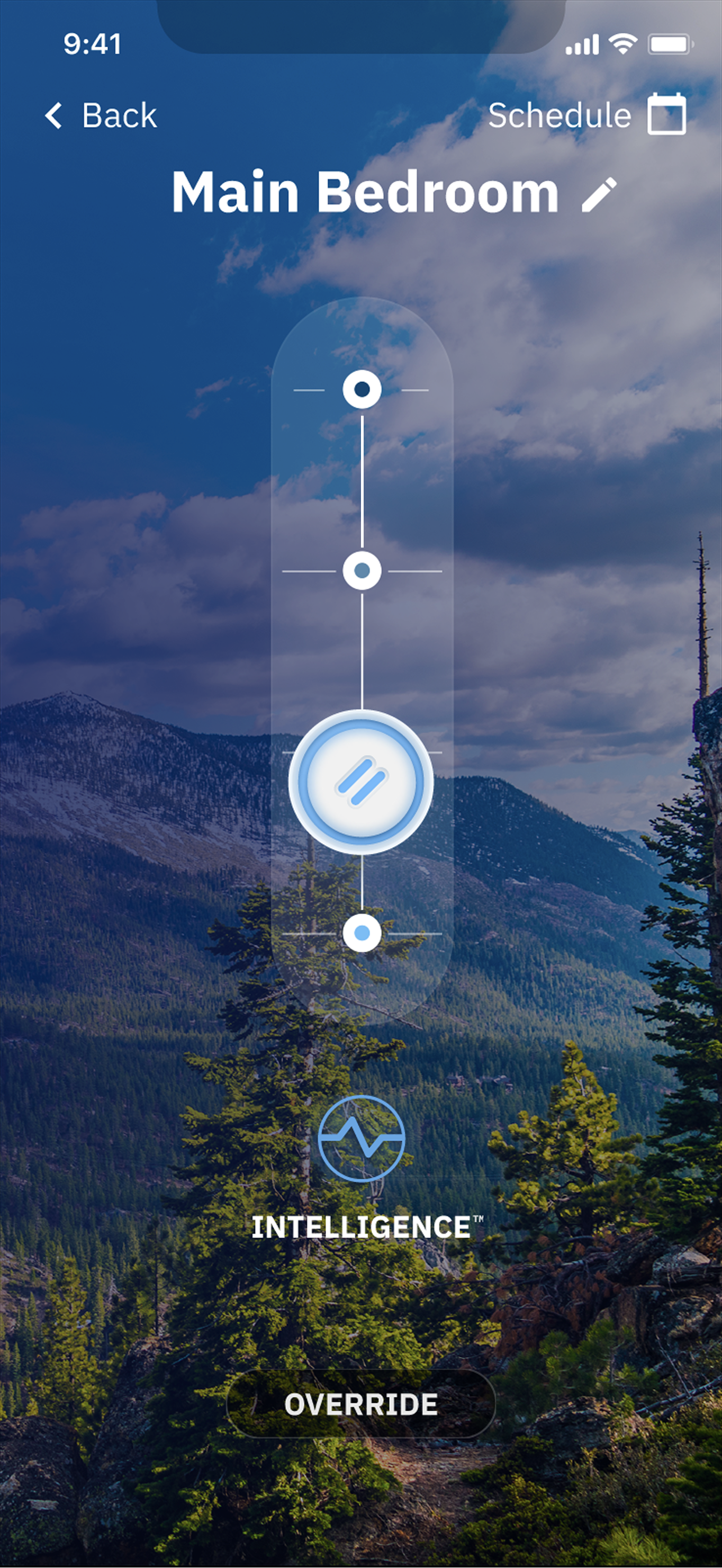
Schedules became the primary interaction model, with manual control as a secondary option for flexibility. The app surfaced contextual data such as weather, daylight, and air quality to reinforce that the system responds to real-world conditions. I also incorporated educational and benefit-driven messaging to explain how light exposure affects circadian rhythms and overall wellness. One tradeoff involved simplicity versus personalization. Highly detailed light curves could overwhelm users, so the design emphasized guided presets that users could adjust rather than build entirely from scratch.
Output
The result was a full mobile app built from the ground up. It included a home dashboard showing room status, current tint levels, and active intelligence features. Users could create and manage schedules, including circadian rhythm programs and time-based routines, with controls for timing, days, and tint levels. The experience integrated wellness education, benefit messaging, and progress indicators that connected daily window behavior to health outcomes. Manual controls remained available but were visually secondary to automated wellness modes.
Outcome
The new experience positioned smart windows as a daily wellness system rather than a technical feature. By focusing on circadian rhythm alignment and automated schedules, the app helped users benefit from healthy light exposure without constant adjustments. Users responded positively to the wellness framing and the clarity of automation, and the product felt more purposeful and differentiated from traditional home control apps.