Spot AI
AI Agents
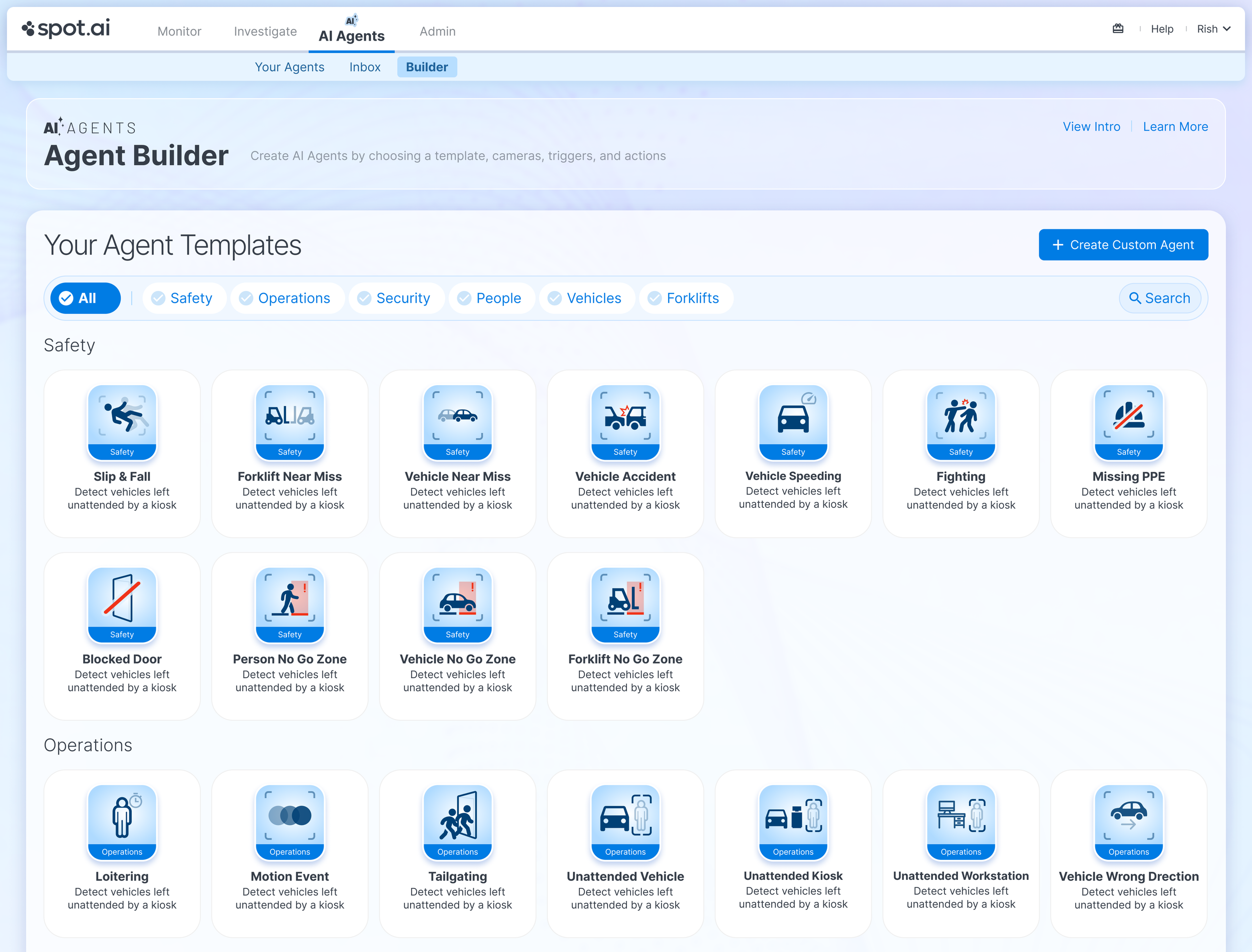
I designed a 0 to 1 AI Agents platform that made advanced AI detections easy for customers to configure and use. The builder allowed users to start with ready-made templates and customize them as needed, or create agents from scratch using detailed detection rules, thresholds, and conditions. By connecting detections directly to automated actions, the platform helped customers move from passive video monitoring to proactive, automated operations, and the rollout received consistently positive feedback for clarity and usability.
Context
I worked on the creation of a new AI product that enabled customers to set up automated monitoring agents. The platform supported safety, operations, and security use cases and could trigger automatic actions based on what cameras observed. This was a brand new product area, and my role was to design the foundational experience that translated complex AI detection capabilities into something users could understand, trust, and set up confidently.
Problem
The underlying AI supported many ways to define what an agent should look for and when it should trigger. This made the product extremely flexible, but also easy to overwhelm users. Some customers wanted a fast, reliable way to turn on common agents, while others needed fine-grained control to match their environment. The challenge was designing a setup experience that felt approachable without limiting what the AI could do.
Approach
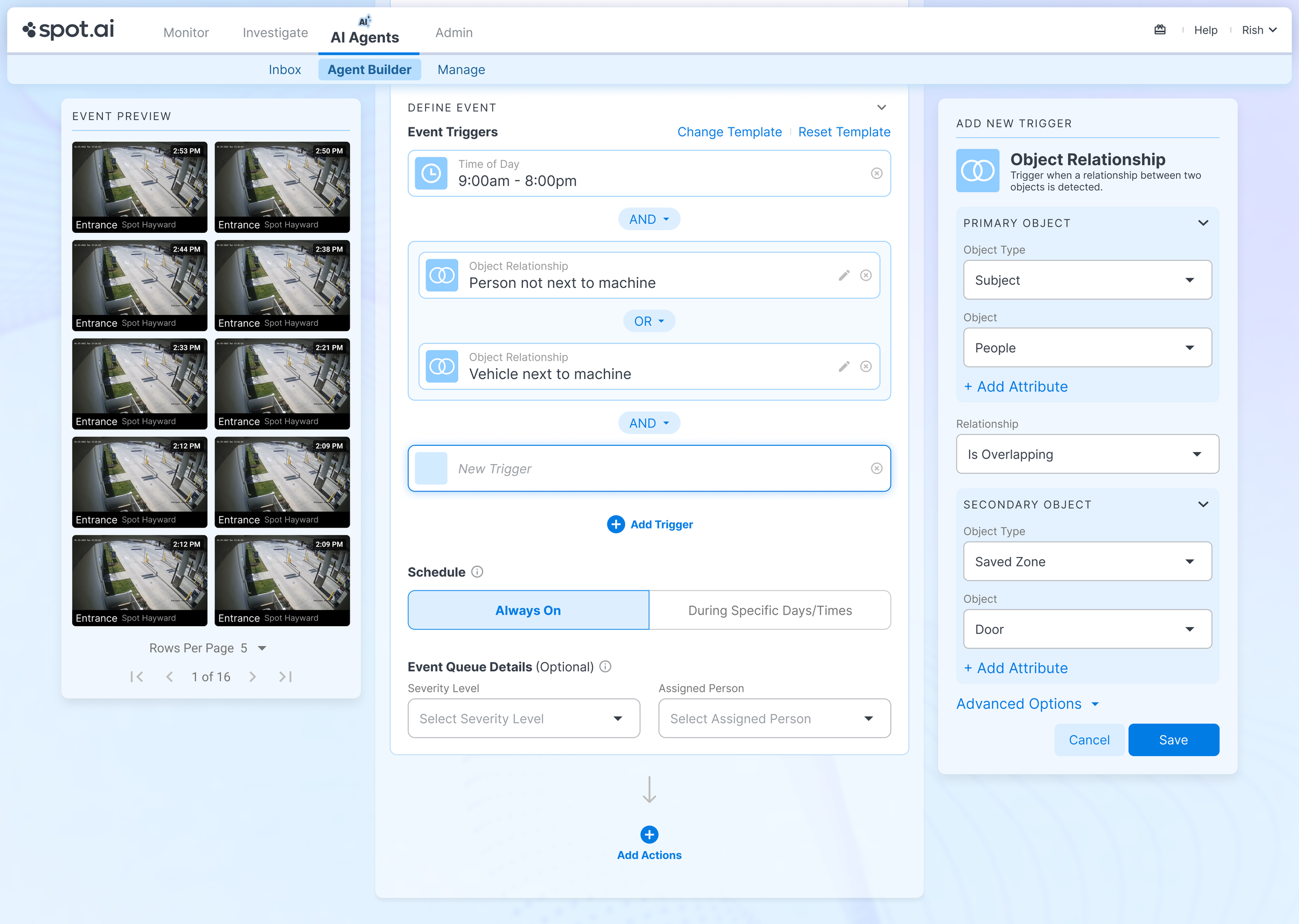
I designed a single flexible builder that supported different levels of user expertise instead of separating simplicity and customization into different tools. Users could start with ready-made agent templates for common monitoring scenarios, then modify those templates to better match their environment, or build agents entirely from scratch using detailed detection rules. The interface broke complex AI logic into modular building blocks such as object relationships, presence or absence conditions, time constraints, and thresholds. This framed setup as rule building rather than technical configuration. Progressive disclosure ensured that complexity only appeared when users needed it, allowing beginners and advanced users to work within the same system.
Output
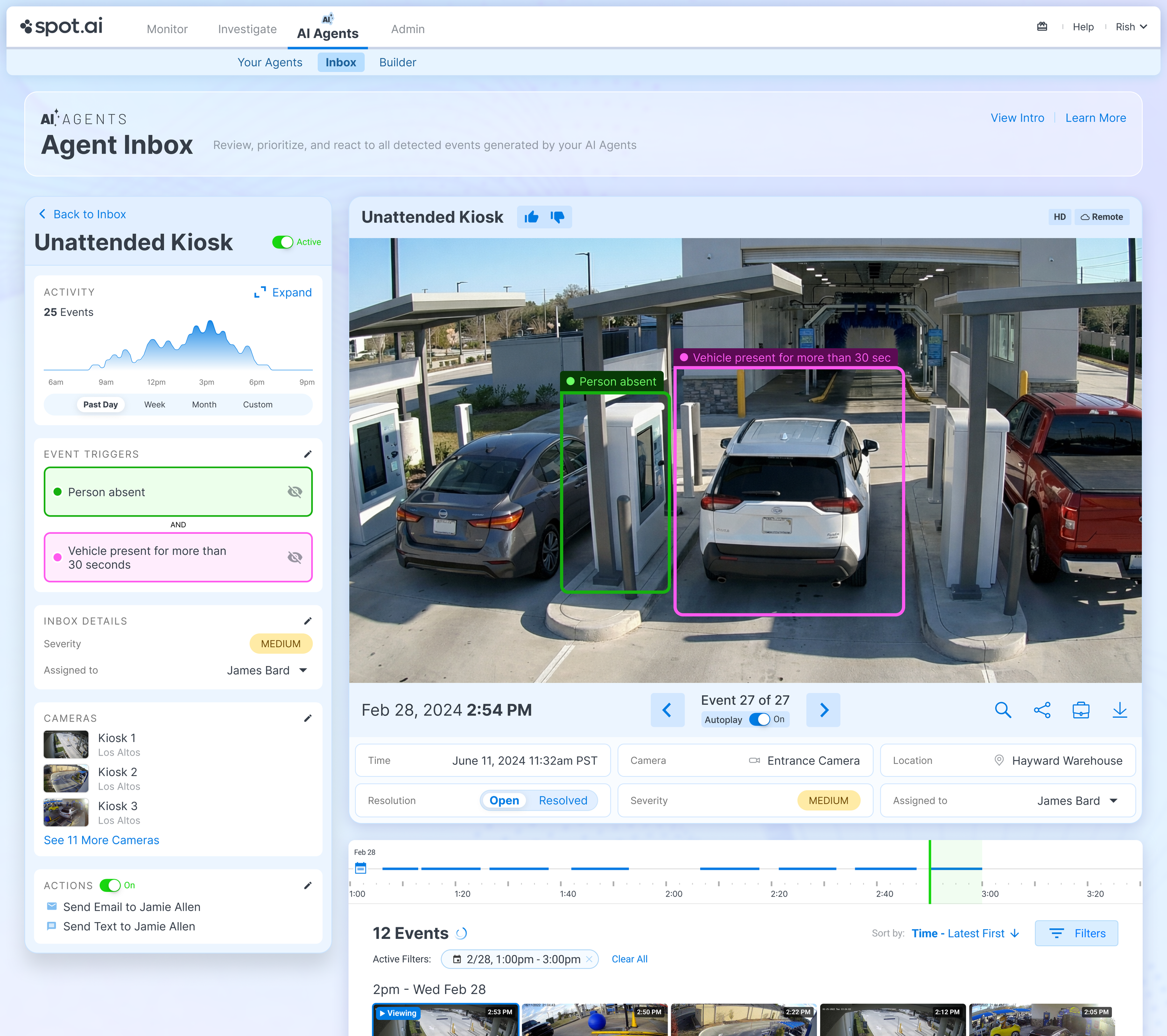
The result was a full AI Agents platform built from the ground up. It included a library of templates for common safety, operations, and security use cases, a flexible event builder for defining triggers and schedules, and a structured workflow that connected detections directly to automated actions. An inbox and event review system surfaced detected incidents, context, and resolution states. The system turned AI detections into operational tools rather than passive alerts.
Outcome
The platform made advanced AI detection accessible while maintaining the flexibility required for complex use cases. Users could launch agents quickly, adapt templates to their needs, or create precise custom logic within the same experience. This lowered the barrier to adopting AI-driven automation and made it easier to connect detections directly to actions, helping customers move from passive monitoring to proactive workflows. The rollout went smoothly and feedback consistently reflected that the system felt clear, practical, and usable despite the sophistication of the underlying AI.